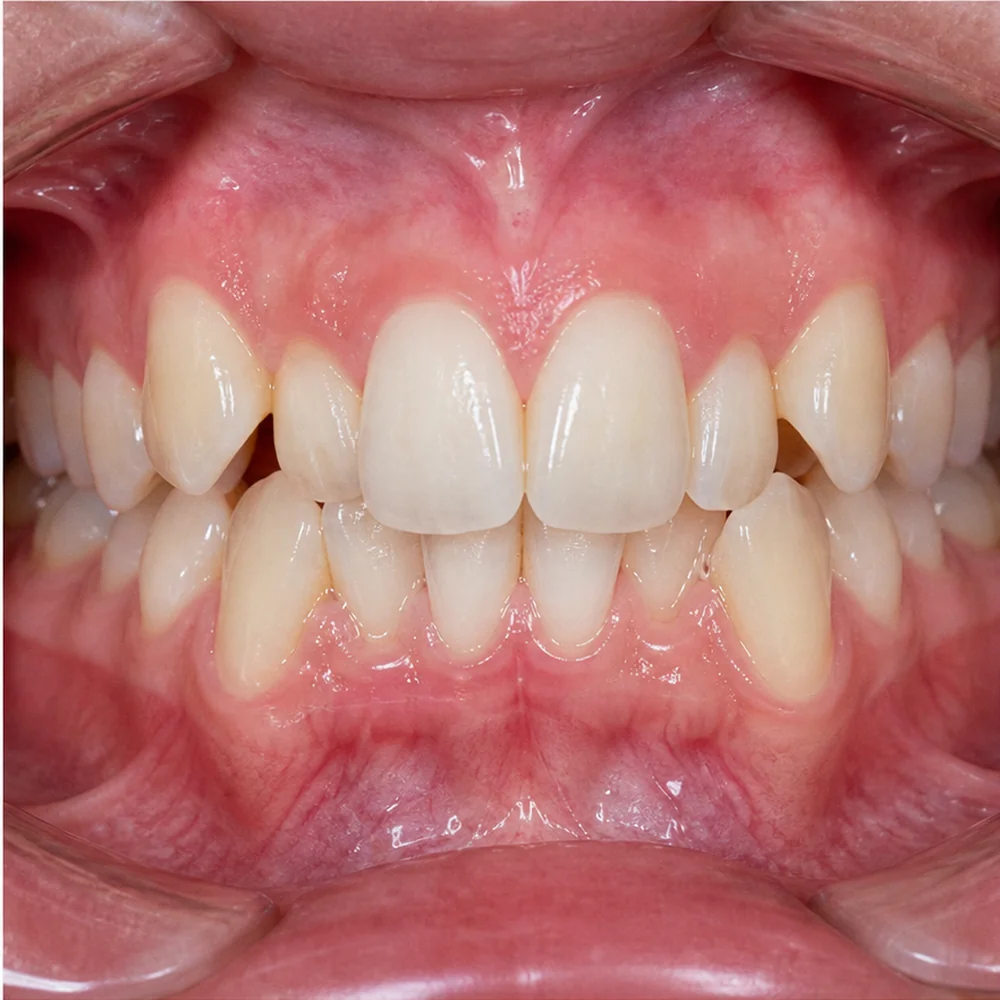
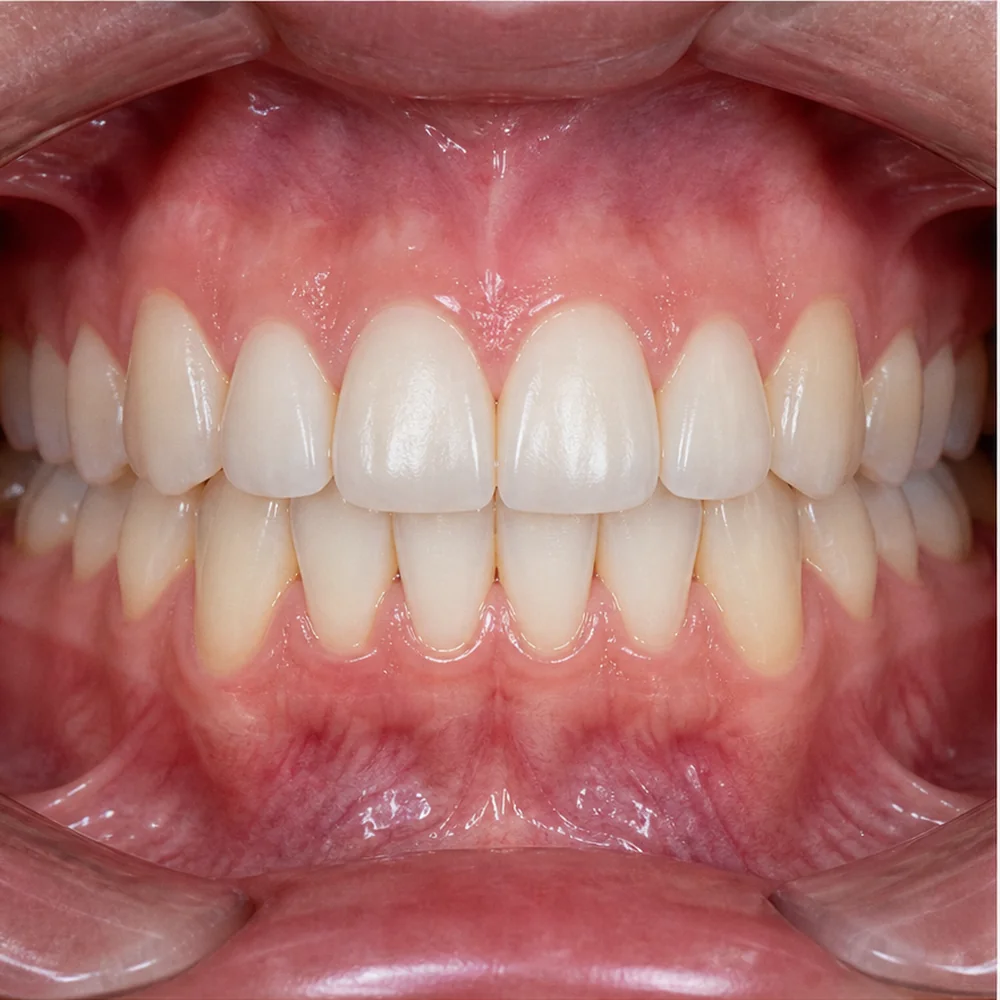
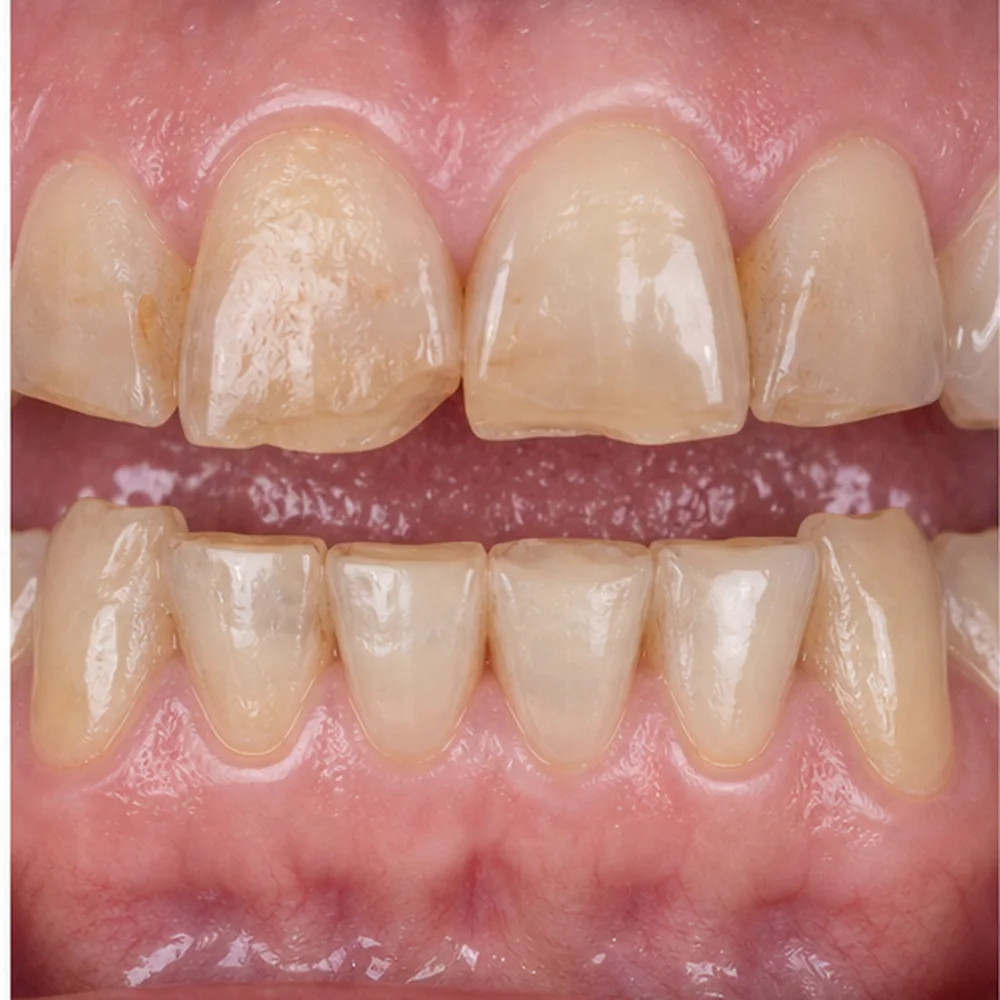
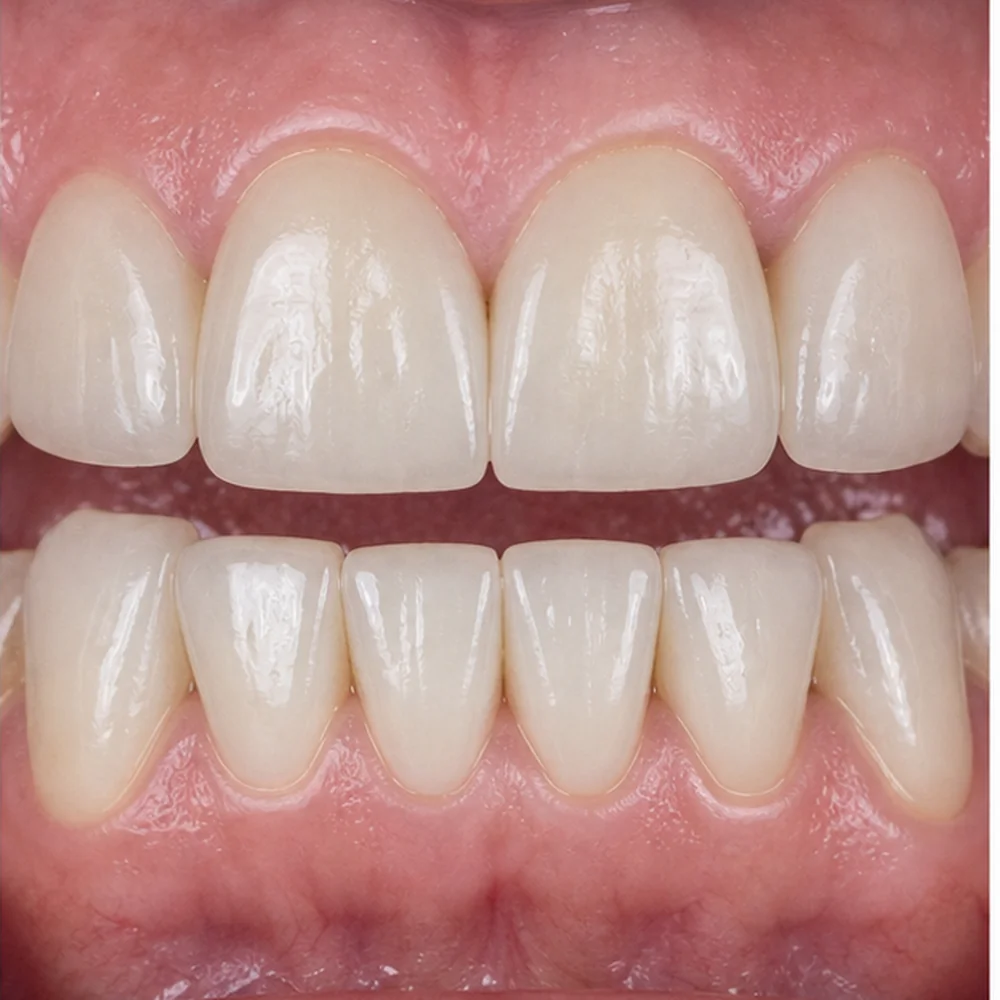
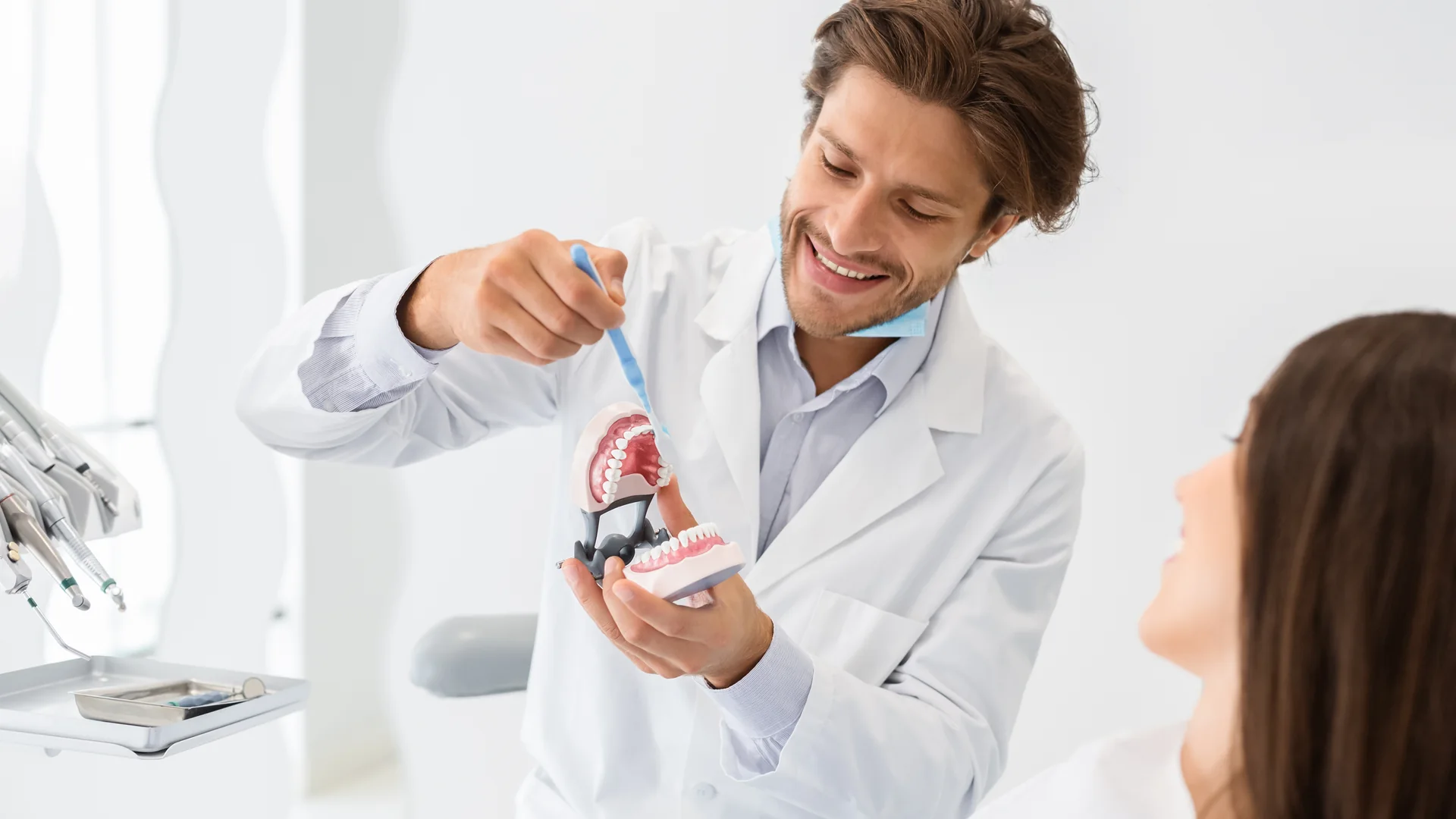
Dental prosthetics encompasses the solutions by which damaged or missing teeth are rebuilt or replaced, restoring both chewing function and speech clarity, as well as a natural aesthetic appearance. At BUTE DENTALL CLINIC in Bucharest and at DENTALL M in Râmnicu Sărat, every prosthetic restoration is planned individually, combining the expertise of 14 specialists with state-of-the-art digital technology, so that the result is durable, comfortable, and as close as possible to the appearance of a healthy tooth.
What is dental prosthetics and when do you need it
Dental prosthetics is the dental specialty concerned with restoring partially destroyed teeth and replacing missing teeth through fixed restorations (crowns, bridges, veneers, inlays/onlays) or removable ones (partial dentures, complete dentures). The objective is not exclusively aesthetic: a missing tooth or a destroyed crown affects the way we chew, the way we pronounce certain sounds, and over time causes neighboring teeth to drift and bone loss in the jaw.
The need for prosthetic work arises in various situations. Sometimes it is advanced decay that has destroyed most of the tooth structure, leaving a healthy root but insufficient coronal tissue for a simple filling. In other cases, an endodontically treated (devitalized) tooth becomes fragile and requires protection with a crown to prevent fracture. Missing teeth — whether lost due to periodontal disease, trauma, or extraction — leave a space that, if untreated, triggers a cascade of problems. Not least, generalized dental wear (from bruxism or an acidic diet) or aesthetic dissatisfaction regarding shape, color, or alignment can be corrected through prosthetic work, including ceramic veneers.
Who is dental prosthetics recommended for
Dental prosthetics is not reserved exclusively for older patients. It addresses a wide range of patients, each with specific needs, and treatment is personalized according to the clinical situation, aesthetic expectations, and available budget.
Patients with teeth severely damaged by decay
When decay has progressed below the gum line or has involved more than half of the coronal structure, a filling no longer provides sufficient resistance. A dental crown — whether on a natural tooth or on an endodontic post — reconstructs the tooth's morphology and protects it from subsequent fractures.
Patients with endodontically treated teeth
Devitalization eliminates infection, but leaves the tooth without the blood supply that kept it elastic. A devitalized tooth becomes more fragile over time and can crack under chewing pressure. Covering it with a dental crown or an extended inlay/onlay is an essential preventive measure, not an option.
Patients with missing teeth
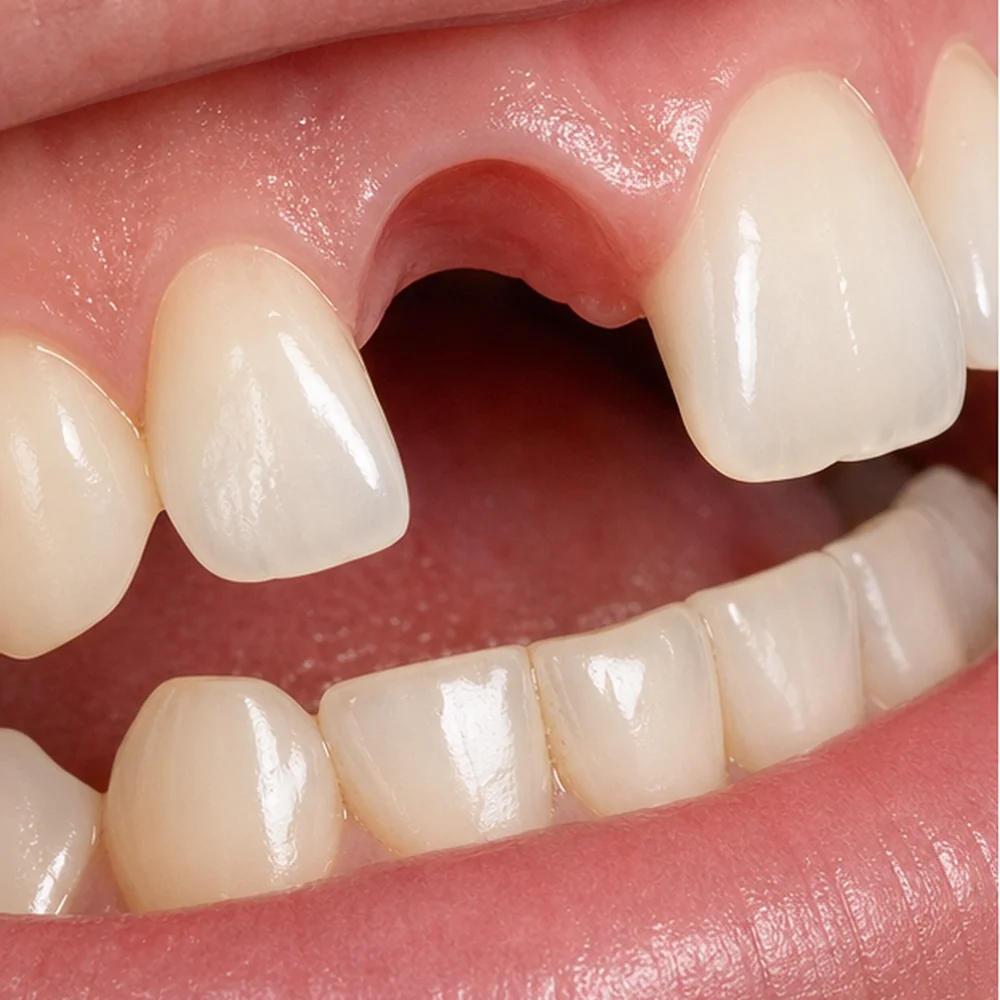
An edentulous space, regardless of location, invites adjacent teeth to drift and opposing teeth to over-erupt. Over time, alveolar bone is lost, which can later complicate implant placement. Solutions range from a bridge on natural teeth to a crown on an implant or a removable partial denture, depending on how many teeth are missing and the general state of the arch.
Patients with dental wear or occlusal problems
Bruxism, chronic gastric reflux, or excessive consumption of acidic foods can erode enamel and visibly reduce tooth size. Rebuilding the entire vertical dimension of occlusion is a complex treatment involving prosthetic work on multiple teeth and usually an interdisciplinary team.
Patients with multiple or total tooth loss
Extensive partial or total edentulism severely affects quality of life. Full dentures or implant-supported dentures (overdentures) restore the ability to eat, speak, and smile naturally.
Types and prosthetic treatment options
Prosthetic restorations fall into two main categories: fixed — cemented or screwed in place and not removable — and removable, which the patient or dentist can take out. The choice depends on how many teeth need to be restored, bone quality, the presence of implants, and the patient's preference.
Dental crowns
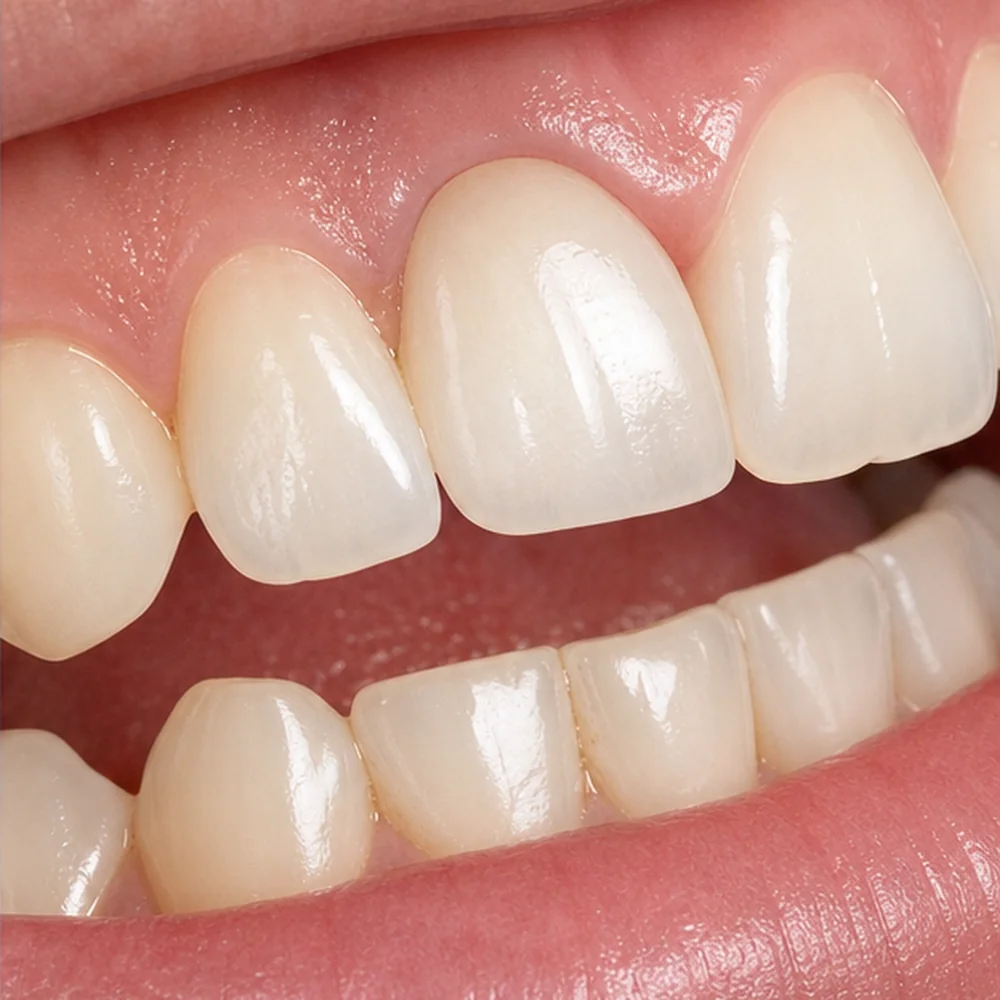
A crown completely covers a prepared (ground) tooth and restores its shape, size, and function. It can be placed on a natural tooth with sufficient remaining structure, on a tooth reconstructed with a post, or on a dental implant. A crown on an implant does not require grinding down healthy neighboring teeth, making it the ideal biological solution when bone conditions allow implant insertion.
Dental bridges
A bridge replaces one or more missing teeth by using the adjacent teeth as pillars. These are prepared (ground down), the area is impressed, and a single unit is fabricated that "spans" the gap. The advantage over a removable denture is its fixed nature; the disadvantage compared to an implant crown is the need to sacrifice healthy tooth structure from the supporting teeth. For this reason, a bridge is indicated mainly when the adjacent teeth already needed crowns, or when implant placement is not possible.
Dental veneers
Veneers are thin shells of ceramic (or composite) applied to the visible (labial) surface of front teeth. They are minimally invasive — tooth preparation is minimal or even absent in the case of no-prep veneers — and correct color, shape, length, or minor positional irregularities. Ceramic veneers (E-max) offer superior translucency and aesthetics, closely approximating the appearance of natural enamel. They are not recommended for patients with severe untreated bruxism or significant malocclusions.
Inlays and onlays
Inlays and onlays are indirect restorations — fabricated in a laboratory — that fill the area of the tooth destroyed by decay or fracture, without completely covering the crown. An inlay is placed within the cusps; an onlay extends coverage over one or more cusps. Compared with a conventional filling, these restorations are more precise, more durable, and integrate better into the occlusion, especially when destruction is extensive.
Removable partial dentures
When several teeth are missing and implant placement is not possible or not desired, a removable partial denture provides a functional and accessible solution. It is fabricated with a metal framework (cobalt-chrome skeleton) or from flexible materials (Valplast, flexible acrylic) on which artificial teeth are mounted. The denture rests on the remaining teeth and mucosa; retention is achieved through clasps or precision attachments.
Complete dentures
In cases of total edentulism, a conventional complete denture covers the entire prosthetic field and is maintained through suction and the tonicity of the oral musculature. Comfort and stability depend greatly on the quality of the prosthetic field: well-contoured bone retains the denture more firmly than a resorbed ridge. Initial adaptation requires patience — the first weeks involve progressive adjustments.
Implant-supported dentures (overdentures)
An overdenture is a removable prosthesis anchored on two to four implants via attachment systems (balls, bars, locators). Compared with a conventional complete denture, it offers significantly greater stability, prevents bone resorption in the implant area, and improves chewing comfort. It can be removed by the patient for daily cleaning but does not shift during eating or speaking.
Materials used in modern prosthetics
The choice of material influences not only aesthetics, but also mechanical strength, biocompatibility, and the longevity of the restoration. There is no "universally best" material — the decision is made with the patient, following an analysis of functional and aesthetic requirements.
Zirconia is a high-strength ceramic material, opaque in its classic (monolithic) form, but also available in translucent versions (translucent or multilayer zirconia) that allow an appearance close to natural teeth. Fracture resistance is superior to pure ceramic, making it suitable for molar crowns or posterior bridges. It contains no metal, so it does not produce a grey line at the gingival margin over time.
Full ceramic (E-max, lithium disilicate) offers excellent translucency and is the preferred material for veneers and crowns in the front of the mouth, where aesthetics are paramount. Its strength is lower than zirconia, so it is avoided on teeth with high occlusal demands or in patients who grind their teeth.
Metal-ceramic — a combination of a metal substructure and fired ceramic on the exterior — was the standard for decades. It is robust and versatile, but carries the risk of a grey line appearing at the gum margin as gingival recession occurs; also, the natural opalescence of the tooth is harder to mimic than with full-ceramic solutions. It remains a viable option for less visible areas or when mechanical strength is a priority.
How prosthetic treatment is carried out, step by step
A well-planned prosthetic treatment never starts with an impression. Before any prosthetic work, the dentist evaluates the state of the entire oral cavity: bone quality, periodontal health, occlusion, the presence of any infections or unresolved decay. Prosthetic restorations placed on untreated tissue have a short lifespan.
Consultation and treatment plan include clinical examination, digital X-rays, and where needed, 3D tomography (CBCT) to evaluate bone structures. At both DentALL clinics, dental photographs are taken and, where useful, a diagnostic wax-up — a wax model showing what the teeth will look like after treatment, before any real tooth is prepared.
Tooth preparation involves controlled grinding of the tooth or teeth to be covered by the crown or bridge. The amount of material removed depends on the type of restoration and the chosen material. For minimally invasive veneers, preparation is minimal or absent.
The impression can be taken conventionally (with addition or condensation silicone in an impression tray) or digitally, with the 3D intraoral scanner available at DentALL clinics. The digital impression eliminates the discomfort of impression material in the mouth, reduces the risk of handling errors, and transmits data instantly to the dental laboratory. The precision of digital scanning is markedly superior to conventional impressions, especially for extensive restorations or implant crowns.
The provisional restoration — a temporary crown or bridge in acrylic — protects the prepared tooth while the definitive restoration is being fabricated. The provisional also allows the shape and color to be tested before the final version.
Try-in and adjustments is the stage where the restoration received from the laboratory is checked on models or directly in the oral cavity. Marginal fit, occlusal contacts, and aesthetics are verified. Any adjustments are made before definitive cementation.
Definitive cementation or screwing uses high-strength adhesive materials. For implant crowns, screw retention can also be chosen, allowing the restoration to be retrieved if necessary.
The dental laboratory plays an essential role in this entire process. The quality of the technical execution — uniform ceramic thickness, precision of margins, color characterization — makes the difference between a mediocre and an excellent restoration. DentALL clinics work with laboratories with proven experience and material traceability.
Recovery, risks, and common myths
After cementation of a crown or bridge, the patient may notice mild sensitivity to extreme temperatures or pressure, which usually resolves within a few days. Adapting to the shape of the new restoration is rapid; minor occlusal adjustments are sometimes needed at a check-up one week after fitting. Removable dentures require a longer adaptation period — a few weeks — during which the cheek and tongue musculature learns to cooperate with the new structure.
Common myths about prosthetic restorations
"Zirconia crowns look artificial, like plastic teeth." This was a justified perception in the case of opaque monolithic zirconia from the first generation. Current translucent and multilayer zirconia, chromatically characterized by the dental technician, faithfully mimics the color gradient, enamel translucency, and dentin opalescence. The visual difference from a healthy natural tooth is practically imperceptible to the untrained eye.
"Removable dentures always slip and are embarrassing." The stability of a conventional complete denture depends largely on the residual prosthetic field. A well-adapted denture, made on a precise impression, holds firmly under normal chewing and speaking conditions. Instability is more common with heavily resorbed ridges; in these cases, the optimal solution is implant-supported anchoring, which completely resolves the issue of movement.
"A prosthetic restoration lasts a lifetime without any care." The longevity of any restoration — crown, bridge, or denture — depends directly on oral hygiene and regular check-ups. Secondary decay (at the crown margin) and periodontal disease are the main causes of long-term prosthetic failure. An impeccably executed zirconia crown will fail if the tooth it rests on is not properly cleaned.
"A bridge is better than an implant because it avoids surgery." A bridge involves sacrificing the tooth structure of healthy adjacent teeth, which must be ground down to serve as pillars. An implant, by contrast, replaces the root of the missing tooth without touching neighboring teeth and prevents local bone resorption. The decision is made case by case, but biologically an implant is often the more conservative long-term solution.
Cost and what influences the price
The price of prosthetic work varies considerably depending on several factors, which we explain transparently at consultation so the patient understands where each component of the cost comes from.
The chosen material is one of the main factors. Multilayer translucent zirconia, full ceramic E-max, and metal-ceramic fall within different cost ranges, reflecting both the price of raw materials and the complexity of the laboratory fabrication process.
The number of units in the restoration directly influences the total cost. A single crown is more affordable than a three- or six-unit bridge; a complete denture is an extensive restoration requiring many hours of dental technician work.
The type of support — on a natural tooth or on an implant — significantly modifies the cost. An implant crown requires adding the cost of the implant and the surgical insertion procedure, making the total cost of the solution higher than a crown on a natural tooth, even if the crown itself is similar.
The dental laboratory and level of personalization of the restoration also influence the price. Individual manual characterization, layer-by-layer color stratification, and additional resistance testing increase laboratory costs but guarantee a superior aesthetic result.
Preliminary treatments required — endodontic therapy, extractions, periodontal treatment, bone augmentation — are not included in the price of the prosthetic restoration, but are part of the overall treatment plan and influence the total budget.
At DentALL, after the initial consultation and complete evaluation, the patient receives a detailed treatment plan with all stages and associated costs, with no hidden charges.
Why choose DentALL for prosthetic work
Dental prosthetics is a discipline where details make the difference. A one-millimeter error at the crown margin can allow bacterial penetration; a poorly chosen color can make the restoration visibly artificial; an incorrect occlusal contact can cause muscle pain or overload neighboring teeth. Choosing the clinic and team therefore matters enormously.
At BUTE DENTALL CLINIC in Bucharest and at DENTALL M in Râmnicu Sărat, a team of 14 specialists with experience in fixed, removable, and implant-supported prosthetics has treated over 10,000 patients and applies identical protocols at both locations. Regardless of which clinic you visit, quality standards, sterilization, and communication are the same.
The digital technology integrated into the prosthetic workflow makes the process more precise and more comfortable for the patient. The 3D intraoral scanner replaces conventional impressions where indicated, eliminating discomfort and reducing impression errors. 3D tomography (CBCT) allows detailed evaluation of bone structures before planning implants or extensive restorations. Digital radiology with reduced dose is available as routine, and sterilization follows traceable cycles, guaranteeing the safety of every appointment.
Every prosthetic restoration is planned interdisciplinarily: if periodontology, implantology, or endodontics is needed before the prosthetic work, these stages are coordinated at the same clinic, without the need to visit multiple providers. This approach reduces the total treatment time and ensures coherence of the therapeutic plan.
Transparent communication is part of DentALL's values. At the initial consultation you receive a clear treatment plan with detailed stages and costs, without hard-to-understand medical jargon and without pressure to make an immediate decision. If you need time to research or discuss at home, the team respects your pace.
Conclusion and invitation to book an appointment
Modern dental prosthetics offers solutions for almost any clinical situation — from a single crown on a devitalized tooth to complete oral rehabilitations on implants. Today's materials, digital impressions, and close collaboration with high-quality laboratories make it possible to achieve a result that looks natural, functions correctly, and lasts over time — provided adequate oral hygiene and regular check-ups are maintained.
If you have a damaged tooth, an edentulous space, or a removable denture that no longer provides the comfort it once did, the first step is a consultation at which the dentist assesses the situation and presents real options — not the most expensive solution, but the most appropriate for you.
Book an appointment at BUTE DENTALL CLINIC (Bucharest) or at DENTALL M (Râmnicu Sărat) through our online appointment form. The DentALL team is ready to answer any questions and to provide you with a transparent treatment plan tailored to your situation.